About Us

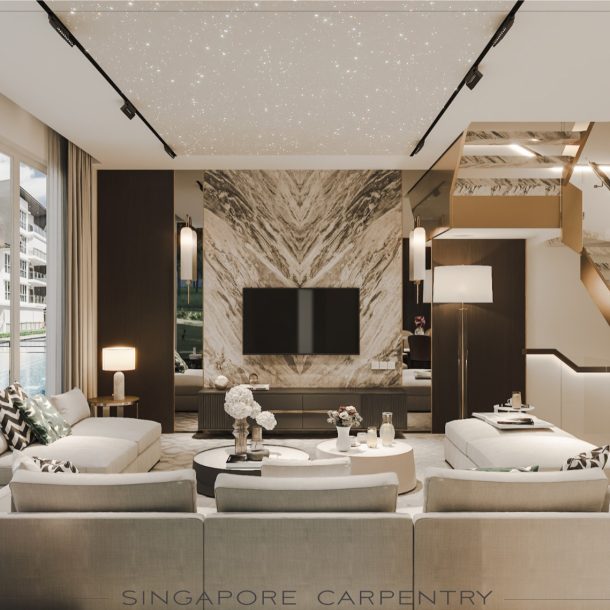
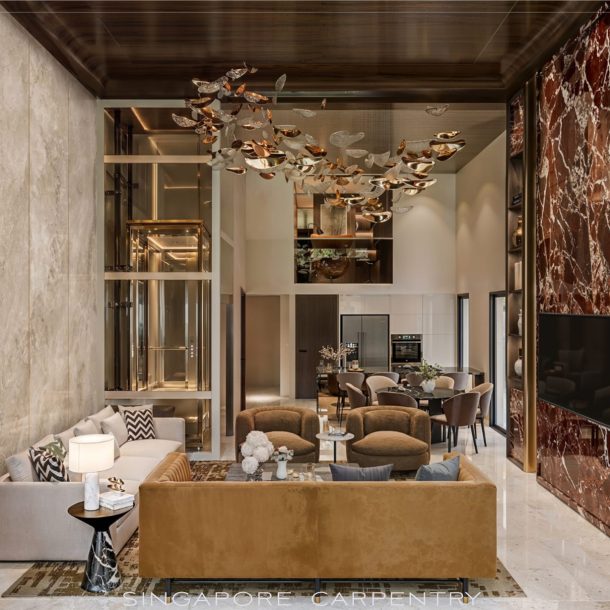
Singapore Carpentry group strives to provide superior carpentry, interior design and construction services at an affordable price.
This blog was created to showcase the challenges we faced in order to create the perfect home for you.

From Family Doubts to Hospital Basements: The Carpenter Who Builds More Than Furniture.

Ernest Tan, 40, founder of Singapore Carpentry, still recalls the awkward silence at Chinese New Year dinners when relatives learned what he did for a living.
Ernest Tan, who holds double degrees in computing and economics from the National University of Singapore, incubated his company in 2013. His relatives were baffled.
“They asked if my studies were that bad, or if I had failed to graduate,” he said, half-smiling.
His parents were no more encouraging. Coming from a poor family, they urged him to look beyond carpentry for a “proper” job. “They felt it was too big a risk,” Ernest Tan said.
But he saw something others missed. Amid a property boom, demand for quality renovation work was surging and the craftsmanship behind it was being taken for granted. He dived in anyway.
A Business Built Across Two Countries

Today, Singapore Carpentry employs nine carpenters in Singapore; all of them are foreigners from China and Malaysia, they also operate robotic machines that partially automate some fabrication work. Across the border, a factory in Foshan, China, handles roughly 80 per cent of the carpentry labour.


“Not that we don’t want locals,” Tan said. “Singaporeans are simply not into this line.”
He understands why. In a city that gravitates toward “glamorous” careers in finance, medicine and tourism, carpentry is seen as unglamorous, its physically demanding, and a trade where one is perpetually exposed to glue and sawdust.
Yet it is precisely this gap between perception and possibility that has defined Tan’s career. And nowhere is that more visible than in his most unexpected project to date.
The Basement That Became a Premium Screening Centre

When Crawfurd Hospital set out to reimagine its basement level, the brief was unusual: transform a utilitarian underground space into a premium health screening centre, executed with a resourceful and efficient approach.
The impetus came from several private banks, which were looking to partner with Crawfurd Hospital to offer their high-net-worth clientele a more complete suite of health services. The renovation was undertaken specifically to meet the needs of this discerning group, these individuals were accustomed to discretion, comfort and efficiency, and for whom a hospital visit should feel less like a clinical errand and more like a curated experience.

From the start, Tan worked closely with the Crawfurd Hospital team, walking through the basement together and discussing how to make the space work within its constraints. It was not a matter of simply executing a contract, both sides sat down to figure out what was realistically achievable, where compromises could be made, and how to keep the human experience of the future patients front and centre.
That collaborative spirit mattered because the project was not without its hurdles. The original timeline called for the renovation to be completed in two weeks. In practice, it took longer as much of the fabrication had to be shipped from the Foshan factory, and the process of selecting and sourcing the right materials for a healthcare environment added layers of complexity that a typical residential job does not face.
Tan is candid about it. “We’re a company, not a miracle worker,” he said. “Transport takes time. Materials need to be right. You can’t rush these things and expect the outcome to hold up, especially in a hospital setting.”
What they ultimately built was not merely a renovation, but a proof of concept: that thoughtful carpentry and space design could elevate a basement into an environment worthy of high-net-worth patients, thus proving that premium results come from smart execution, not lavish spending.

A Project That Helps Everyone
For Tan, the appeal of the Crawfurd Hospital contract goes beyond the revenue. It is, in his words, a project with an ‘altruistic ripple’, one that creates value for every party at the table.
For Crawfurd Hospital, the centre enables a deeper partnership with private banks and allows the hospital to deliver a more complete range of health services to a segment it has long wanted to serve better. A well-designed, dedicated screening space signals that the hospital takes premium care seriously, word of mouth among that demographic is worth more than any advertisement.
For the private banks, the arrangement lets them offer their clients something genuinely differentiated. Health screening is widely available in Singapore, but what sets Crawfurd Hospital apart is the comprehensiveness of its offering: packages go beyond routine blood tests to include full-system reviews, advanced imaging such as CT and MRI, multi-cancer early detection tests and one-to-one doctor consultations both before and after the screening, so results are interpreted holistically rather than handed over as a raw report. Beyond the clinic walls, Crawfurd Hospital also extends this into holistic wellness care, supported by digital health tools that let clients track, follow up and manage their health journey long after they leave the centre. For banks, this means their high-net-worth clients gain access to a discreet, truly thorough health service; not just a check-up, but a complete health partnership. In an industry where client retention is everything, that kind of exclusive, substantive wellness offering is a quiet but powerful lever.
And for Singapore Carpentry, the project is a calling card. It demonstrates that the company’s craft extends beyond residential renovations and commercial joinery into the precise, regulated world of healthcare fit-outs, where attention to detail is non-negotiable.
“If a basement can become a place where high-net-worth individuals feel cared for,” Tan said, “then carpentry isn’t just about wood and nails. It’s about shaping how people experience an environment.”

Looking Ahead
Tan acknowledges that the labour challenge in Singapore will persist. Young Singaporeans continue to shy away from the trade, and his reliance on foreign workers and cross-border manufacturing remains a necessity rather than a choice.
But projects like Crawfurd Hospital’s basement give him reason for optimism. They show that carpentry can be modern, sophisticated and deeply relevant to industries such as healthcare, finance and hospitality that Singapore proudly champions.
His relatives may still raise an eyebrow at Chinese New Year. But Tan is no longer explaining himself, he’s too busy building the proof.

Singapore Carpentry group strives to provide superior carpentry, interior design and construction services at an affordable price.
This blog was created to showcase the challenges we faced in order to create the perfect home for you.